
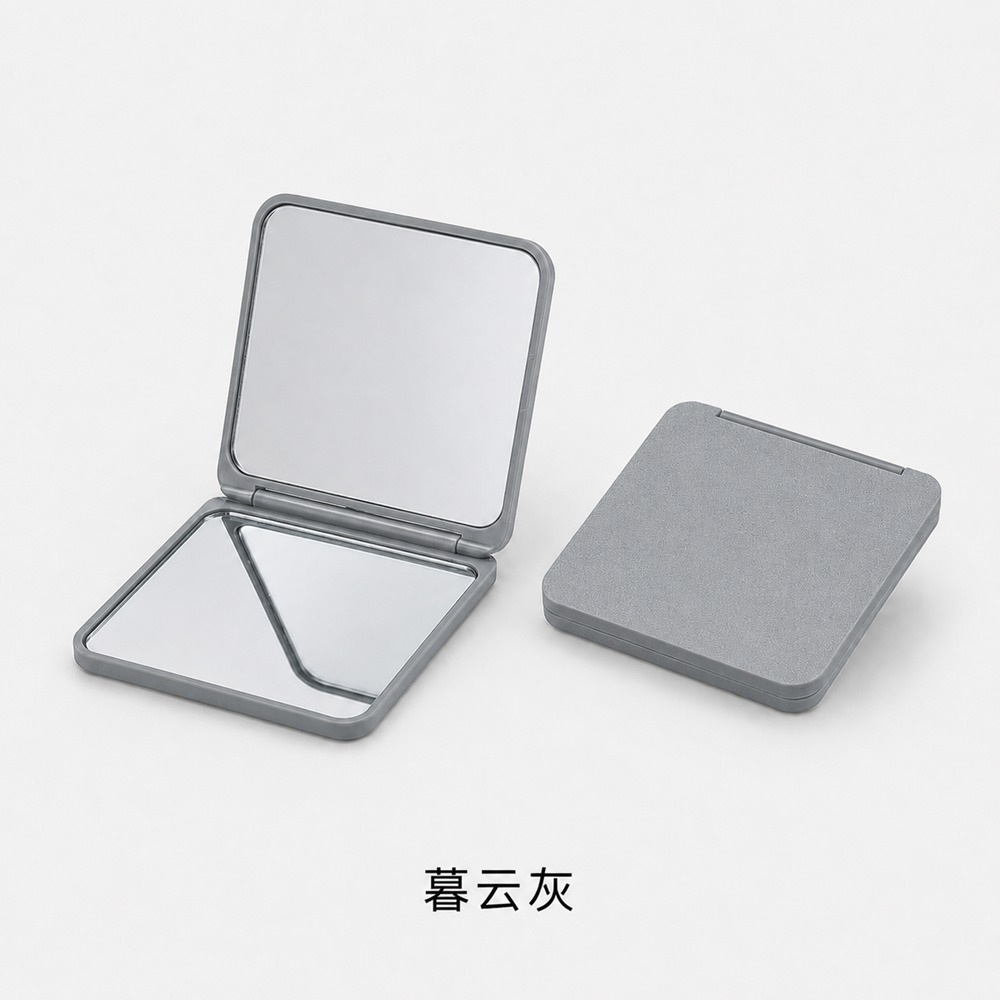
Compact Mirrors: Record the Visible Glass Area
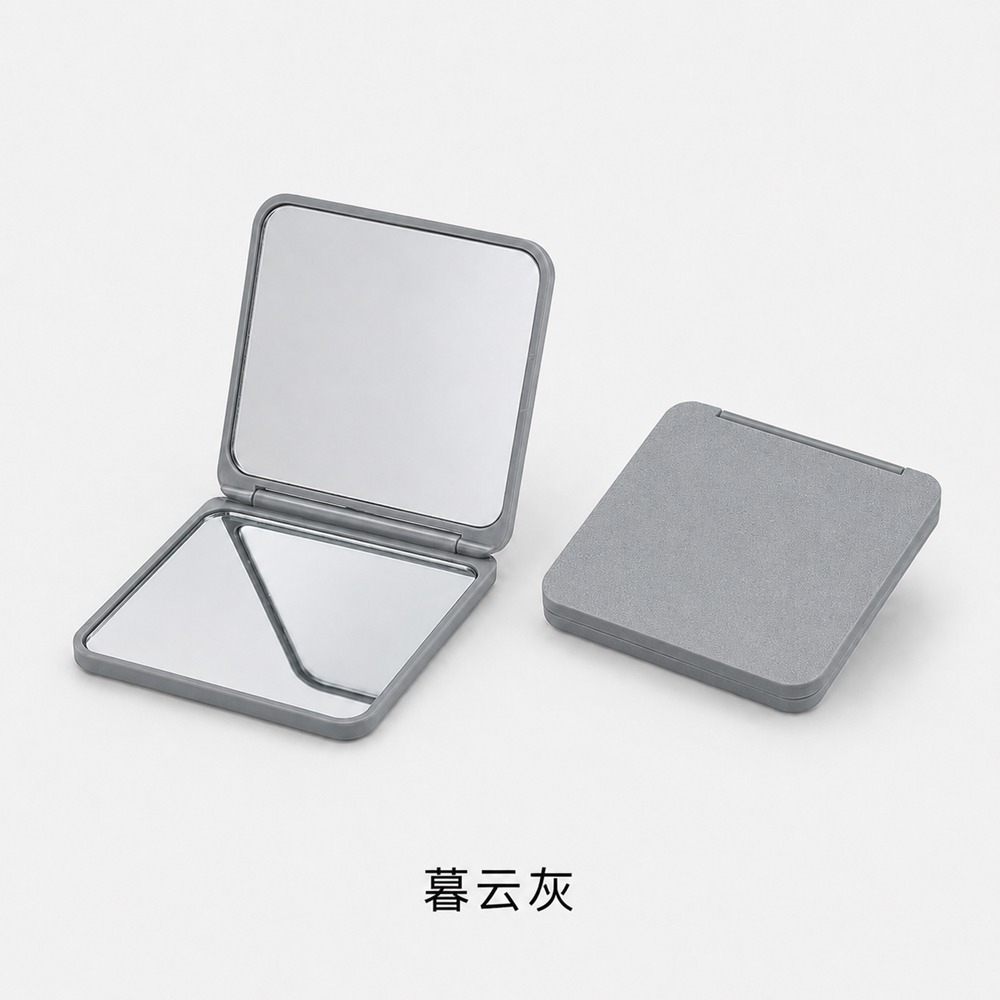
When comparing compact mirrors, request the visible reflective opening separately from the outside case dimensions. Identify the face, orientation and measurement endpoints, including how rounded corners are treated. A case dimension or catalogue photograph cannot establish the usable glass area. Ask for a labelled drawing and verify the selected physical sample using the agreed measurement method.
A buyer selecting pocket mirrors may receive two quotations described as the same size even though the border and reflective opening differ. Outside dimensions explain the case envelope, but they do not describe how much of each face is visibly reflective. This guide helps a purchasing team define that particular comparison. It does not convert a product photograph into a measured drawing or prescribe an optical performance standard.
1. Give each dimension a clear object
Separate the closed case envelope, the visible reflective opening and any glass component dimensions supplied for manufacturing purposes. These can describe different boundaries on the same item. If the supplier gives one width and one height without naming the boundary, ask what those numbers represent before using them to compare two models.
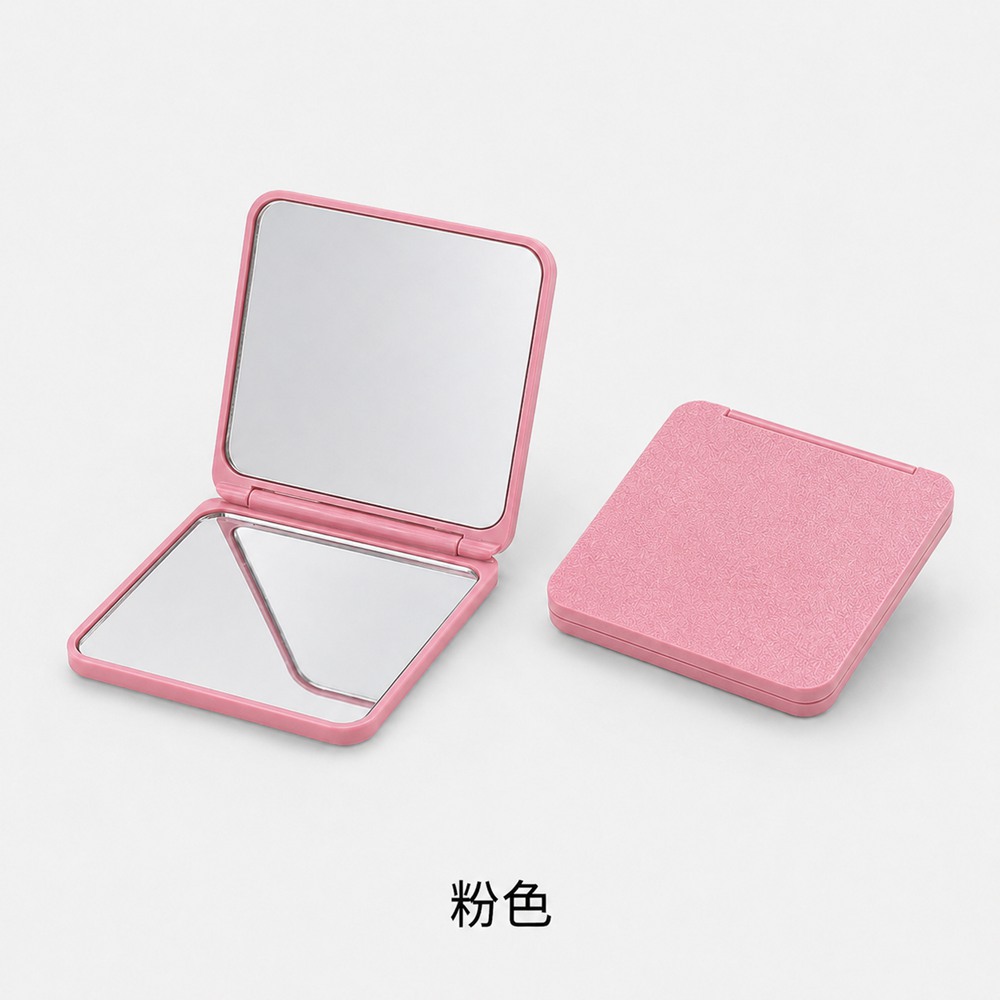
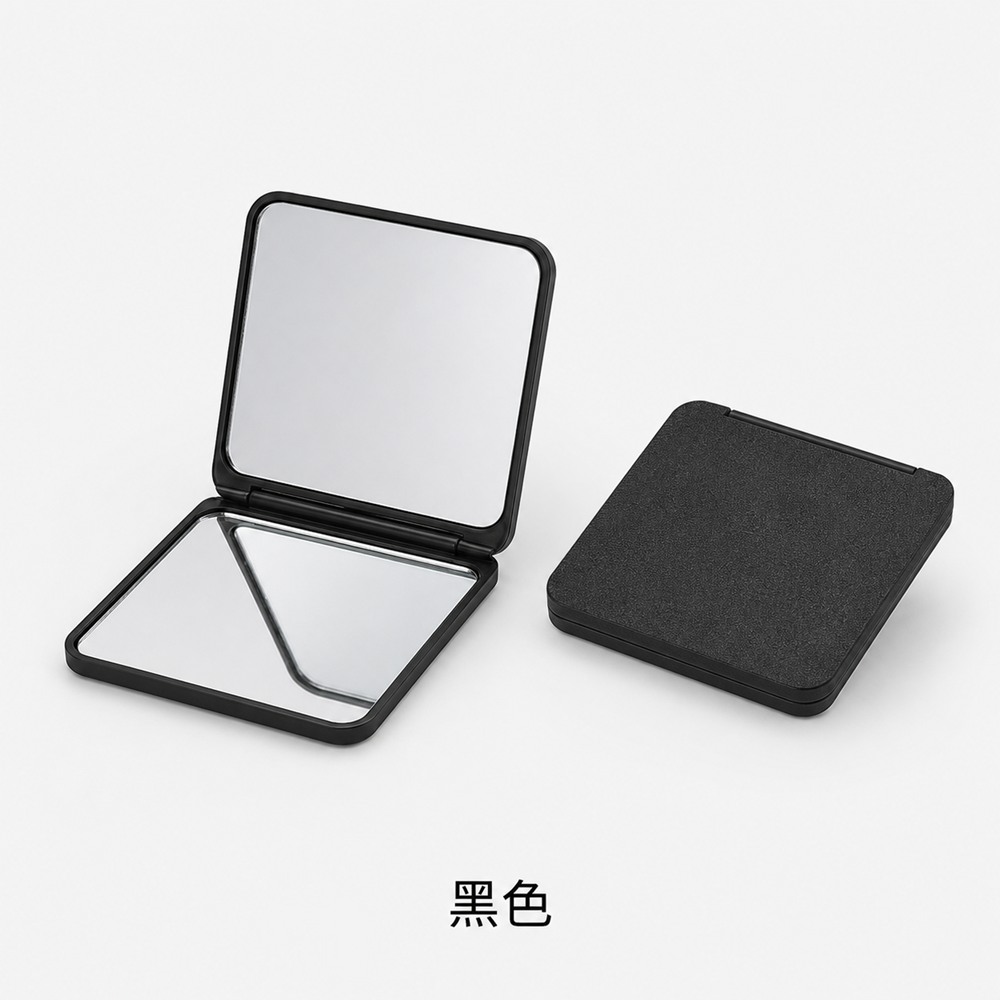
The selected square folding compact has a frame around each visible mirror face. Its listing is a useful visual starting point for this discussion, but the image is not a scale drawing. Avoid measuring screen pixels or assuming that the visible border is identical on every colour or construction version. Request the drawing for the exact proposed item.
Official catalogue reference: square folding compact mirror.
2. Identify the face and the orientation
A folding compact provides more than one reflective face, so name the face being measured. Use a shared photograph with an upper and lower face identifier and show which direction counts as width. A reviewer should not need to guess whether the measurement was taken with the hinge horizontal, vertical or outside the photographed view.
If both faces are intended to provide the same visible opening, ask the supplier to confirm that relationship in writing. If they differ, list them separately. Do not infer equality simply because an open catalogue image looks symmetrical. The approved reference should make it possible to identify which observation belongs to which face without relying on memory.
- Name the closed case and reflective opening separately.
- Assign each face an identifier and measurement orientation.
- Show span endpoints and the treatment of rounded corners.
- Keep the drawing revision linked to the physical sample.
3. Describe the measurement endpoints
For a rectangular opening with rounded corners, ask whether the quoted width and height describe the maximum straight spans, another defined span, or a specific drawing convention. Mark the endpoints on a diagram. This makes the measurement repeatable and prevents a rounded corner from being treated as either missing glass or an unexpected size reduction.
Do not calculate a precise reflective area by multiplying two numbers unless the agreed shape and boundary justify that calculation. A bounding rectangle and a rounded opening have different areas. Most purchasing comparisons can begin with clearly labelled spans and a shape reference, leaving a numerical area requirement to a drawing that actually defines the geometry.
| Comparison field | Boundary being described | Evidence to request |
|---|---|---|
| Closed case envelope | Outside of the closed item | Dimensioned product drawing |
| Visible reflective opening | Exposed mirror within the frame | Face identifier and marked endpoints |
| Glass component size | Manufacturing component boundary | Supplier drawing if relevant to the order |
4. Compare the same fields across offers
Create one comparison sheet with the same named fields for each candidate. Leave an unanswered field pending instead of filling it with the outside case size. This keeps an apparently complete quotation from hiding a different dimensional basis. Ask the supplier to identify any dimension that is only an approximate catalogue value and any drawing revision that supersedes it.
The table below is a specification framework, not a set of measured values for the product shown. The buyer should obtain actual dimensions, a measurement method and any required tolerances directly from the supplier. A larger visible opening also does not, on its own, establish better reflection quality, glass composition or suitability for a particular professional task.
5. Tie the drawing to the selected sample
Once the supplier has clarified the dimensional basis, keep the drawing revision with the sample identifier and colour selection. Record which measurements were actually checked and which remain supplier declarations. If a sample appears different from the drawing, photograph the relevant boundary and ask for clarification rather than quietly changing the expected dimension to match it.
Before confirming the order, decide which reference governs a later comparison: the signed drawing, an approved physical sample, or an expressly agreed combination. Resolve conflicts between those references while the selection is still open. This creates a useful purchasing record without inventing a dimensional tolerance or claiming that unperformed optical or material tests have been completed.
Frequently Asked Questions
Can the closed case size stand in for the mirror opening?
No. The case envelope and the exposed reflective opening describe different boundaries. Ask the supplier to state both fields when the distinction affects the selection.
Should the two reflective faces have identical dimensions?
That is a requirement to confirm for the selected version, not an assumption to make from an apparently symmetrical image. Ask for each face to be identified on the drawing.
Does a larger reflective opening prove better glass?
No. Visible size does not establish composition, reflection quality or a test result. Specify any optical or material requirement separately and request evidence appropriate to that requirement.
For a product-specific enquiry, square folding compact mirror is the catalogue starting point. Read the supplier blog and contact the supplier with the references and open questions described above.