
Tabletop Vanity Mirrors: Match Frame to Display
Specify tabletop vanity mirrors by the complete frame and stand construction, mirror movement, usable viewing area and the space available on the display. Compare actual product references rather than names alone. Confirm material declarations and evaluate a physical sample before using appearance, a product-family label or a metal bracket as evidence of performance or environmental benefits.
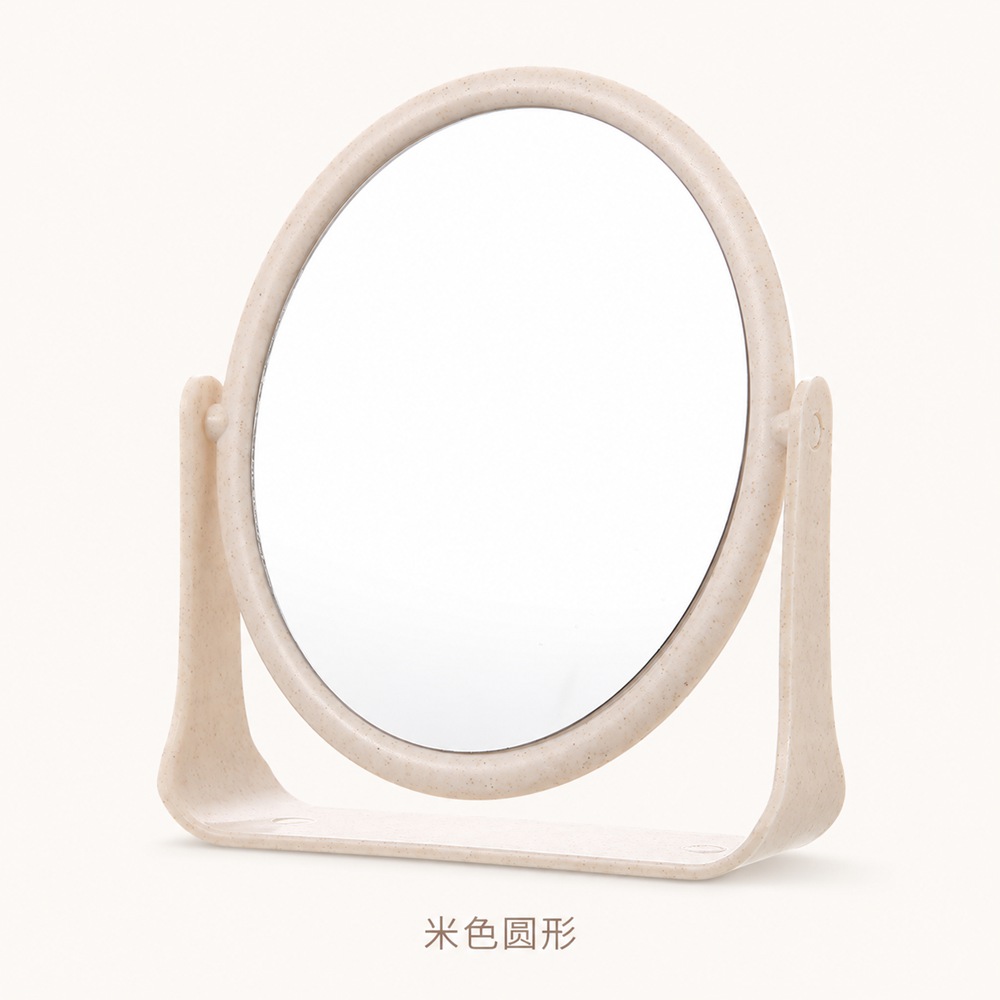
A countertop assortment may include a softly colored plastic frame, a transparent frame and a transparent mirror held by a metal bracket. They can serve a similar viewing task while creating different display and handling requirements. Qinzhuo lists all three constructions, making them useful comparison references for a buyer preparing an item schedule rather than searching for a universally best mirror.
1. Write down the complete material description
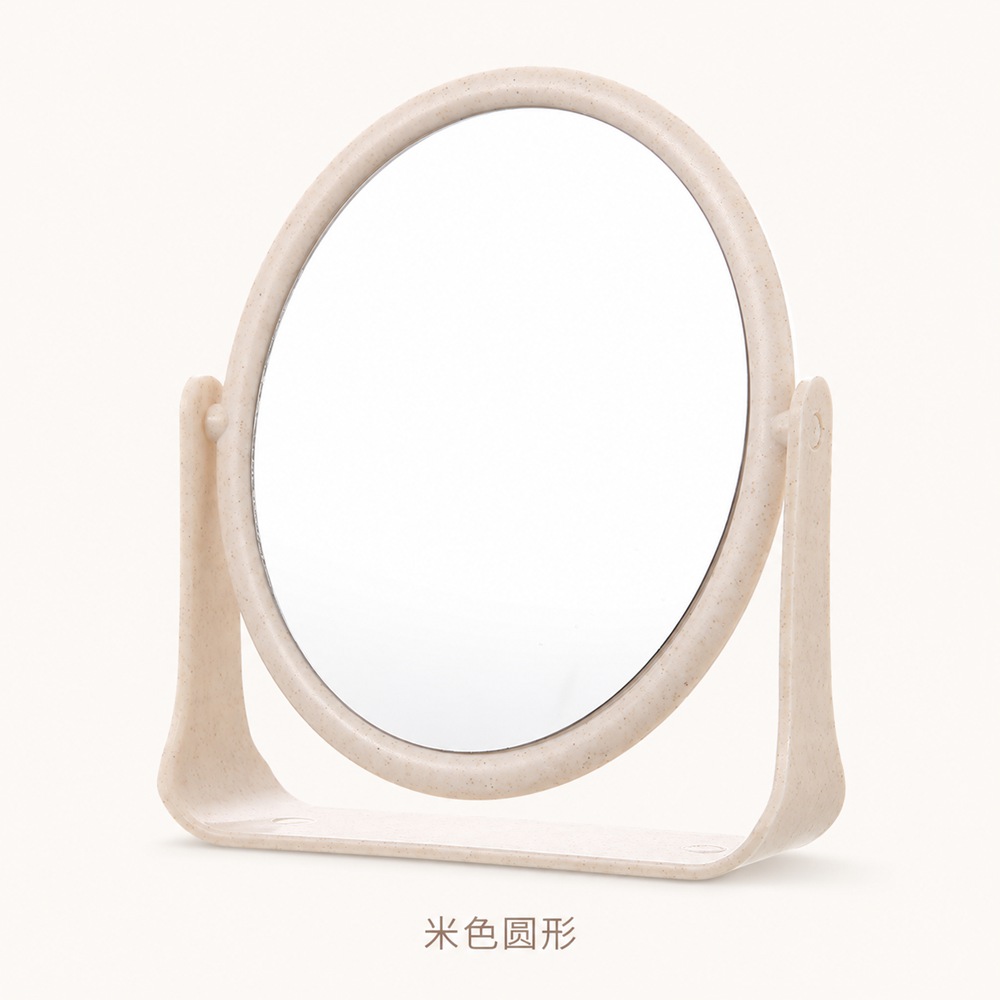
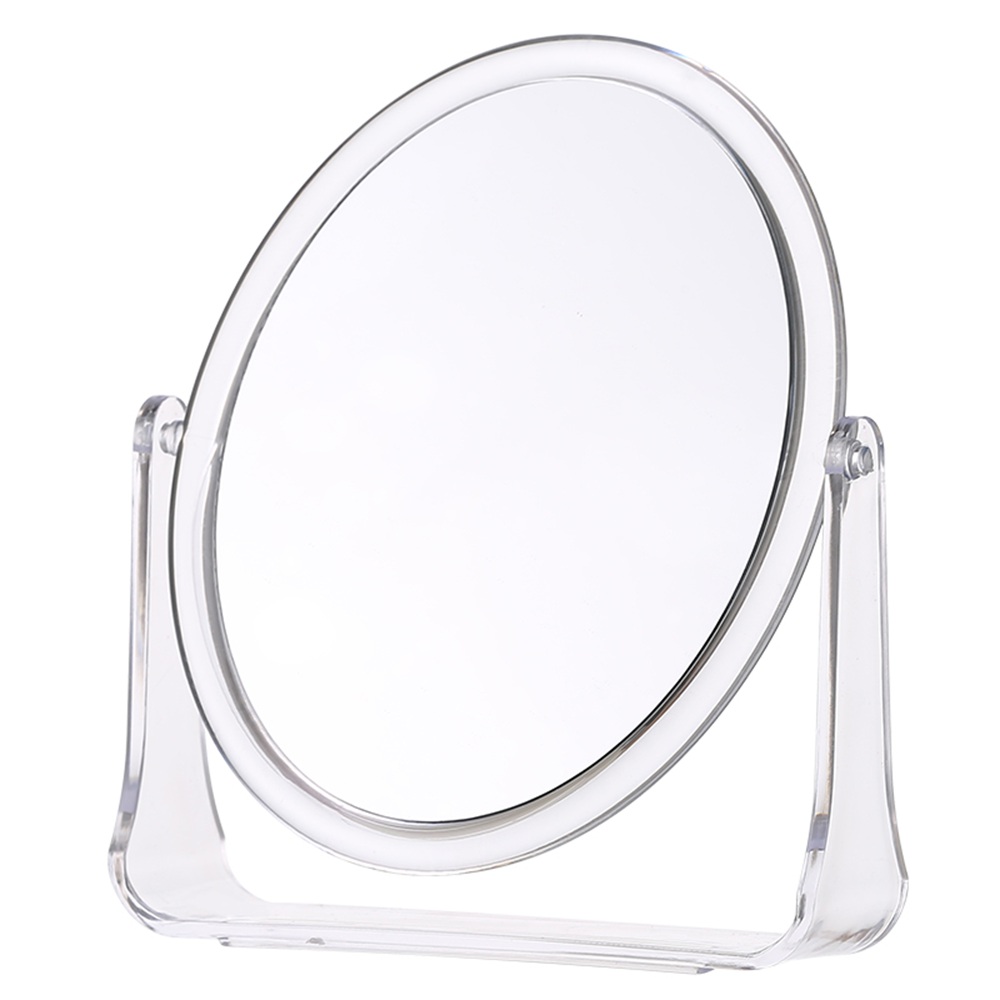
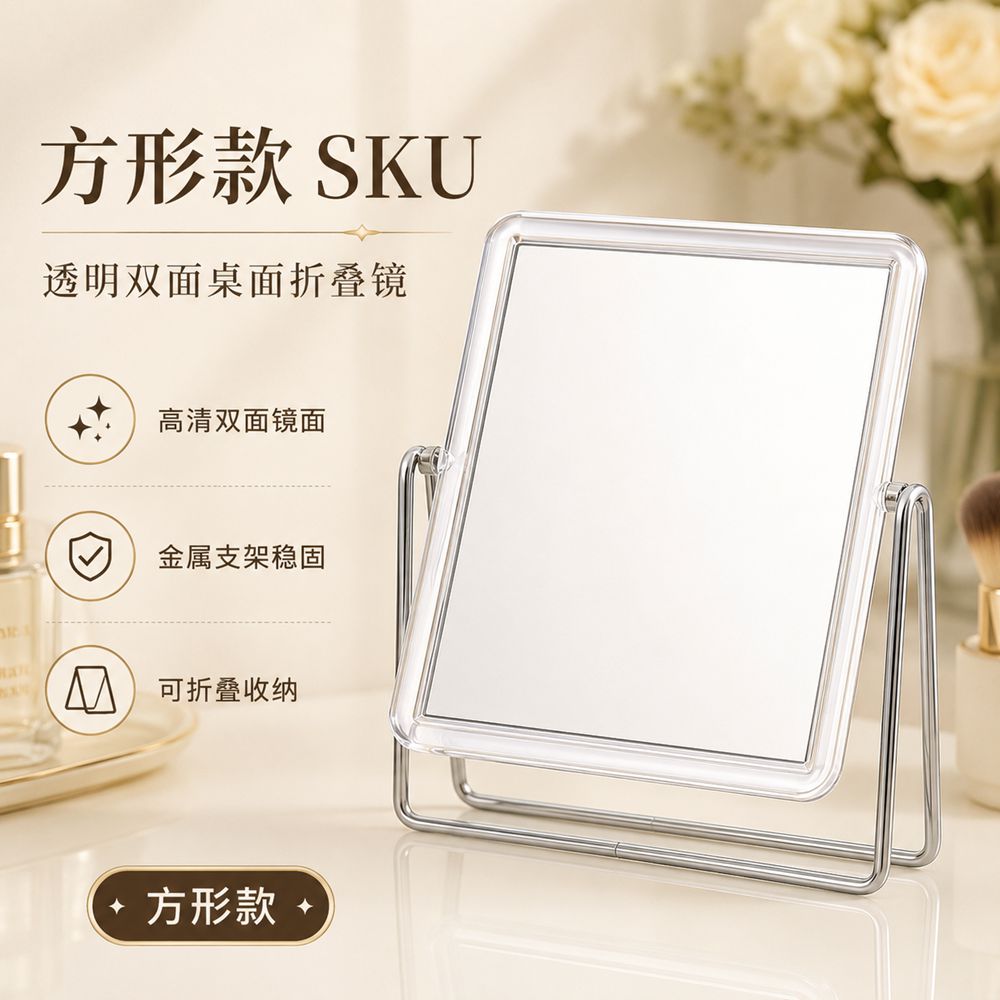
The Wheat Straw Tabletop Mirror page lists PP plastic and glass mirror. The transparent desktop mirror lists a PS plastic frame and glass, while the iron-frame version adds an iron bracket to the PS frame and glass. Preserve these distinctions in the inquiry rather than describing every transparent product as the same construction.
The wheat-straw product name does not establish plant content, recyclability or biodegradability. Request a current material declaration for the selected item if those properties matter to your market. Avoid turning a catalogue family name into a claim on a retail pack without supporting evidence.
Catalogue references: wheat-straw named tabletop mirror, transparent desktop mirror, iron-frame desktop mirror.
2. Check the stand on the intended counter
Ask for the open footprint and overall dimensions of the chosen shape, then compare them with the planned shelf, vanity or demonstration counter. Include clearance behind the mirror and enough room for a user to adjust its angle. A stand that fits within a carton may need more space when opened for display.
All three selected listings describe a rotating double-sided desktop design. Review the actual movement and angle retention on a sample. Check whether the frame touches the counter at its intended positions and whether the unit stays usable on the selected surface. Do not infer stability from bracket material alone.
- Record frame, bracket and glass as separate components.
- Check the open stand footprint on the real display.
- Confirm the function of both mirror faces.
3. Compare references by purchase requirement
Keep the comparison tied to what the buyer needs to decide. A colored frame may suit one display concept, while a transparent frame leaves a different visual impression. The iron-bracket version introduces another construction to review; it does not automatically establish greater strength, longer life or better value.
Ask the supplier to match each quoted reference to the selected shape and color. Where the page groups several variants, confirm which dimensions and weight belong to each. A photograph of a round mirror should not silently approve a square version just because they share a listing.
| Reference | Listed construction | Buyer confirmation |
|---|---|---|
| Wheat-straw named tabletop mirror | PP plastic and glass | Material declaration and selected variant |
| Transparent desktop mirror | PS frame and glass | Shape, open footprint and pivot |
| Iron-frame transparent mirror | Iron bracket, PS frame and glass | Bracket arrangement and angle retention |
4. Approve the viewing surface and pivot together
Look at a real sample under the lighting and viewing distance expected in the display. Inspect the glass surface for visible marks, edge presentation and anything that interferes with the intended view. Then turn the frame through the positions that users will need and observe the pivot and stand together.
Double-sided does not, by itself, mean one side is magnified. Record the agreed function of each face and request confirmation if magnification is required. Keep any required optical or durability evaluation separate from the practical handling review, and agree the supporting evidence rather than calling a brief sample inspection a test certification.
5. Build an assortment sheet that can be reordered
Use a separate row for each frame, shape and color combination. Attach the chosen product image and identify any branding or packaging request separately. Ask the supplier to confirm availability, commercial conditions and packing for that exact combination before placing the order. Catalogue choices are not a confirmed quotation.
Keep the approved sample reference with the assortment sheet so replenishment uses the same construction. If the bracket, frame material or mirror function changes later, review that change explicitly. This gives receiving staff a practical comparison and helps prevent a visually similar substitute from entering the assortment unnoticed.
Frequently Asked Questions
Does the wheat-straw name prove an environmental claim?
No. The selected page lists PP plastic and glass. Ask for a specific material declaration and evidence for any environmental statement you intend to use. Product naming alone does not establish plant content or end-of-life performance.
Are double-sided tabletop mirrors always magnifying?
No. Specify the function required on each face and ask the supplier to confirm the selected reference. Do not use a double-sided description as a substitute for an explicit magnification specification.
Should a buyer choose a metal bracket automatically?
Choose after reviewing the complete unit on the intended display. Bracket material is only one part of the construction. Assess footprint, movement, angle retention, appearance and packing together, without assuming a metal part proves a performance advantage.
Send the intended display dimensions and a reference list by frame, shape and color. Ask Qinzhuo to confirm the exact construction, both mirror-face functions and the proposed packing before finalizing the assortment. Browse the product catalogue, read the small makeup mirror overview or contact the supplier.